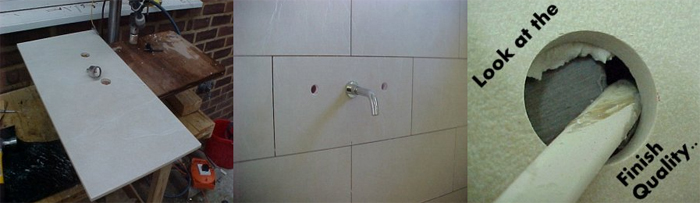
Diamond
drills are used on glass, stained glass, ceramics, ceramic tile,
porcelain, porcelain tile, limestone, marble, granite, slate,
stone and fiberglass. Drills used on wood or metal have a sharp
metal tip or teeth, that cut into the material. These types
of drills do not work on glass, marble, etc. as the tips do
not "bite" into the extremely hard material, and cause
heat buildup that burn up the bit and cause "heat fractures"
in the material. Carbide tipped Spear Point drills are sometimes
used on the "softer" types of hard materials - like
untempered glass, sandstone and marble and some of the less
hard ceramic and porcelain tiles. While they sometimes work,
they tend to chip the hard surface very badly, leaving a rough
hole and often cause breakage due to fractures from the chipping
and heat. Diamond drill bits are designed differently - they
have diamond tips that "grind" into the extremely
hard materials.
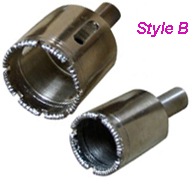
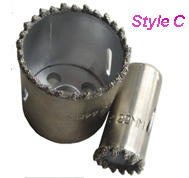
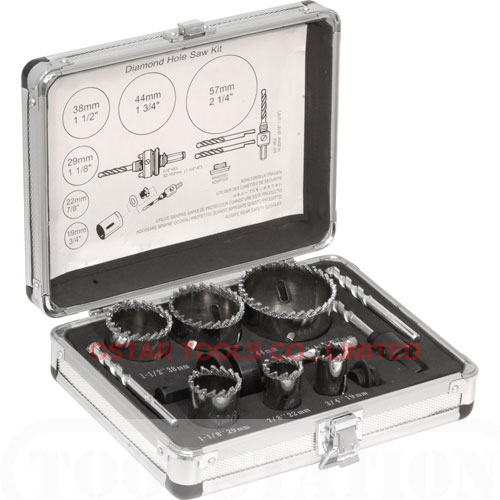
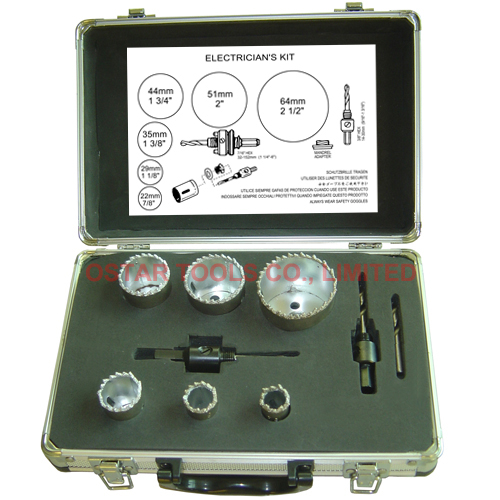
Core
drills only drill out a portion of the resulting hole, so
they tend to drill much faster than blunt nose drills. Core
drills can be used to drill large holes and can be used on
most non-ferious hard materials such as glass, stained glass,
ceramic, porcelain and fiberglass, ceramic or porcelain tile,
limestone, slate, marble, granite and other stone materials.
Bonded diamond drill bits have the diamonds bonded to the
the edges of the drill bit tip, generally using an electroplate
bonding process. These drill bits are generally slow-speed
bits and are fairly inexpensive. During use, the diamonds
eventually wear off of the bit due to the hardness and abrasiveness
of the material being drilled. Bonded diamond drill bits must
not be used on metal, concrete, or masonry and require proper
speed and adequate water lubrication.
The life of any type of diamond drill bit depends upon the
hardness, abrasiveness and thickness of the material being
drilled and the specific drilling techniques used (drill speed,
pressure and lubrication), however, the diamonds of a drill
bit don't actually wear out as much as they wear off due to
heat and friction caused by the extreme hardness and abrasiveness
of the material drilled. Drilling in glass, ceramic, marble,
etc. is a slow process compared to softer materials such as
wood or even metal. A fairly deep hole can be drilled in wood
in just a few seconds, while it can take 20 or 30 seconds
or longer to drill a hole in standard 1/8" thick glass.
In some very hard stones and tiles, it may take 2 to 3 minutes
to drill only 1/4" deep. Using diamond bits to drill
in hard materials is not difficult, however, it takes time.
A person should consider that they aren't 'drilling' a hole,
as much as 'grinding' a hole.
|